A Cozy Corner Using What You Already Own
A place to read, reflect, or simply sit down, even when there is no spare room.
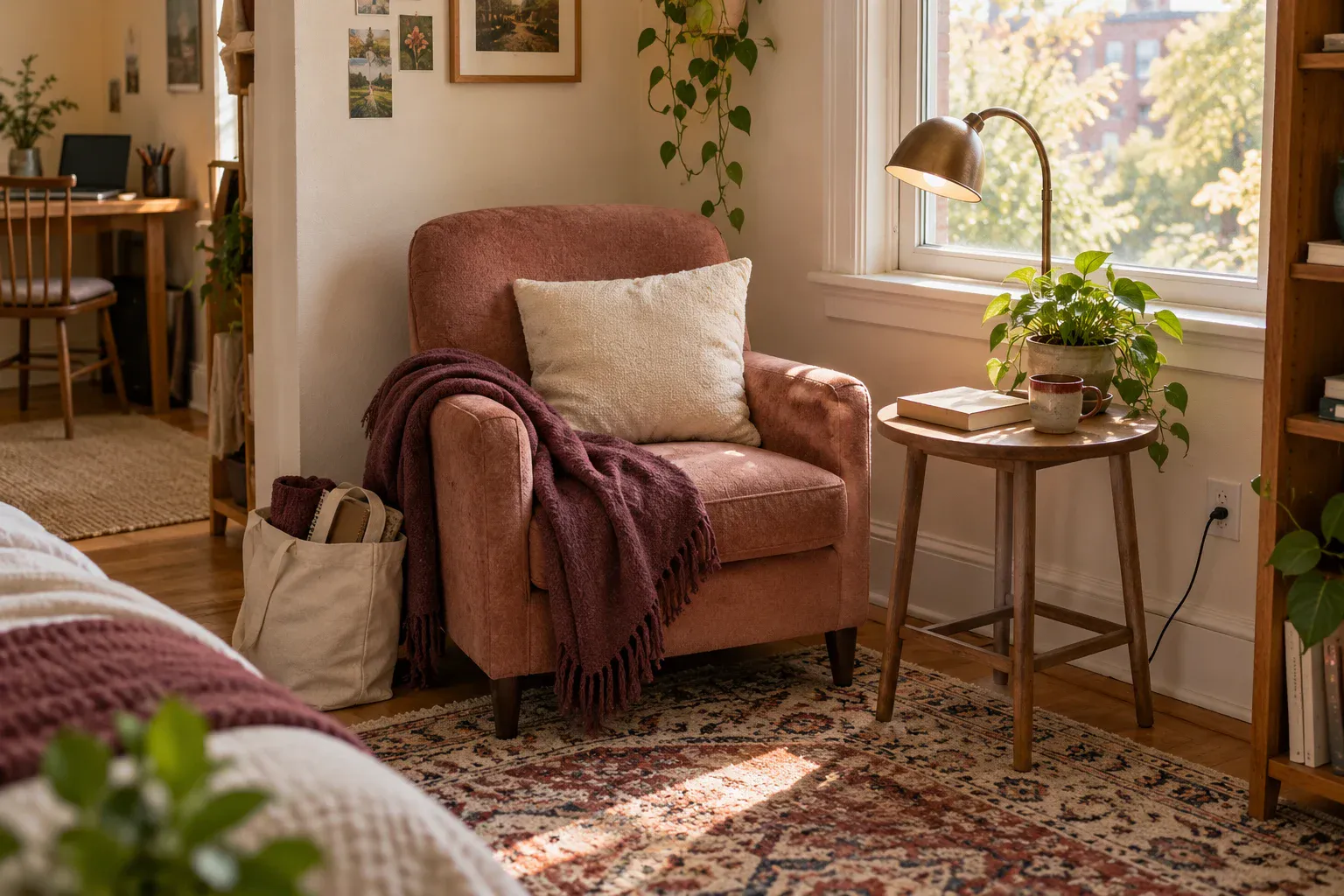
A softer place to begin
The quick reset
Make a cozy corner by choosing one comfortable place, giving it enough light for the activity you want, and keeping only what you will use within reach. Start with a chair, a bedside surface, or a portable basket you already own. Agree on shared-space time if needed, then try the spot before buying anything.
- Choose one activity and a place that is comfortable and accessible for you.
- Gather existing light, support, and supplies without blocking a walking route.
- Try the space for a short visit, then adjust what actually gets in your way.
You see a beautiful reading nook and immediately start counting the things your home does not have. A spare room. A window seat. Enough wall space for another shelf.
Before you turn a quiet place into a shopping list, ask a smaller question: where could you comfortably spend fifteen minutes doing something you enjoy?
A cozy corner can be the end of a sofa, a chair beside a lamp, or the kitchen table during an agreed quiet window. It does not need to stay arranged all day. It needs to work when you are ready to use it.
Begin with what you want to do there
Choose an activity before choosing a look. Reading asks for useful light and somewhere to put the book. Listening to an album asks for a comfortable seat. Writing asks for support under the paper. Sitting quietly may ask for nothing more than permission to leave the next task alone.
If you are unsure what you would enjoy, start with these journal prompts for a new chapter. There is no need to buy supplies for a version of yourself you have not met yet.
Write one sentence: “I want a place where I can ___ for ___ minutes.” Make the time realistic for your current schedule. Five minutes after a late shift counts just as much as a long afternoon.
Match the idea to the space you actually have
| Your available space | Start with | Make it easier to use |
|---|---|---|
| One end of a shared sofa | A cushion that supports you and one book | Agree on a short quiet window; return shared items afterward. |
| A bedside surface | Your existing light and a small notebook | Keep the things you reach for close; use another spot if bed is uncomfortable for the activity. |
| A kitchen or dining table | One cleared place and a chair | Put supplies in a tote so setting up and clearing away are simple. |
| A chair in a busy room | A comfortable seat facing something you like | Choose a time with fewer interruptions; privacy does not require a new divider. |
| No permanent spot | A portable basket or bag | Keep one activity ready to move to whichever surface is available. |
Use a position that suits your body. Floor cushions, low seats, and deep chairs are optional, not requirements for a beautiful home. Keep walking routes clear and cords out of the way. If you need to rearrange shared furniture, check with the people who use it before moving it.
Give the spot three useful things
Comfort: try the seat before decorating it. Does your back want support? Can you reach the table? Would another chair already in the home work better? A folded blanket can be useful without becoming an elaborate display.
Light: choose enough light to see what you are doing comfortably. Use an existing lamp or daylight where practical. Cozy does not have to mean dim, and you do not need a candle to make the space feel intentional.
A ready activity: keep one book, a few sheets of paper, or another small interest within reach. If the basket holds every unfinished project you own, it may start to feel like another demand. Pick what you want for this visit.
In a shared home, agree on time as well as space
A cushion cannot create an agreement that nobody has made.
Try: “I’d like twenty quiet minutes at this end of the table after dinner. Would that work for you? I’ll put my things away afterward.”
If another person also needs the space, find a workable exchange. Your housemate might need the table for coursework while you want to write. One of you may prefer mornings; the other may return from work late. The answer can change with the week.
For a household with care responsibilities, agree on coverage before stepping away. “I’m going to sit and read from seven to seven-fifteen. Can you handle the things we have agreed need attention during that time?” A short pause should not leave someone who needs support without it.
Readers living alone may need a different boundary: letting a visible chore wait without turning the pause into a bargain. If that sounds familiar, read about rest guilt and allowing yourself to stop.
Try one ordinary evening before changing anything else
Fictional example: Nia shares a small apartment and wants to read again. She uses the dining chair that feels most comfortable, brings the existing desk lamp over for the evening, and keeps her paperback in a cloth bag. She asks her housemate when the table will be free.
Her first attempt lasts eight minutes. The problem is not the chair’s color. Her phone keeps drawing her back to messages. On her next visit, she leaves necessary calls available and puts the screen out of immediate reach.
That is useful information. The corner did not need a makeover; its use needed one adjustment.
After your first visit, ask: was I comfortable, could I do what I came to do, and what made starting difficult? Change one practical thing. If you want an activity that fits a short window, these screen-free hobbies offer a place to begin.
You can pack the whole corner away when you finish. A room does not have to look permanently restful to hold a little time that belongs to you.
A note worth keeping

The Room Key
A corner becomes yours through the time you spend there, not the things you buy for it.
— Kiki